Teach Yourself Bagpipes by Lindsay Davidson
bringing quality 'piping instruction to you for free| Select course Site entry page | How to practise | Highland Bagpipe library (+videos and hints) | Lindsay Davidson's tune library (scores only) | Smallpipe library | Medieval pipes library | Site map |
| Buy Lindsay's Books | ||||||
J F MacKenzie
Five discussion points
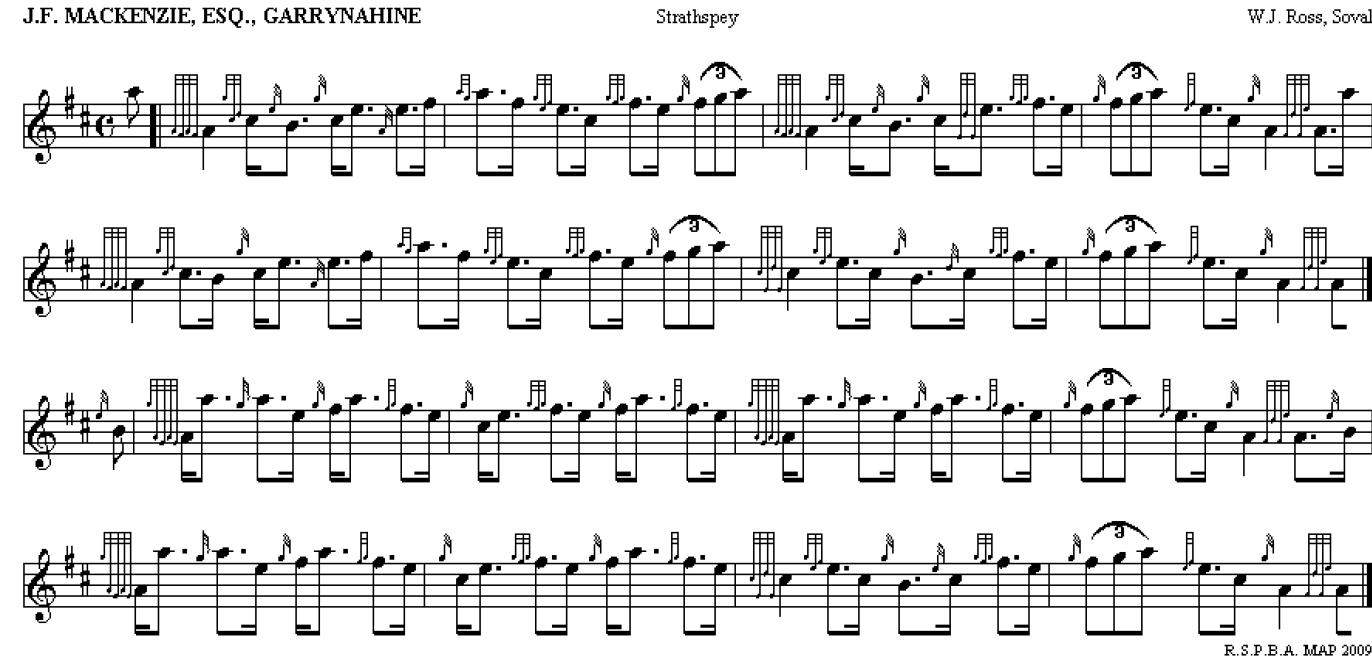
1 C doubling bar 1 - make sure that both Cs are the same length as each other, and that there are short enough. Getting this effect togetther as a band is actually easier to do than it seems, if you work rhythmically, and has a tremendous impact on the listener.
2 High G gracenotes generally - generally these are longer, heavier gacenotes to give the tune a slightly ranting feeling. Mostly, they take up a third of a 32nd note (see exercise 1). Listen to the midi file for where this isn't the case...
3 Strike bar 1 - this, too, is a third of a 32nd and opens on the beat.
4
E doubling bar 2 - this is opened by a small high G gracenote,
which closes on the beat, the same length as the F cut (a 64th note).
This choice has been made in order to mark out the strathspey pattern
of emphasis.
5 Grip bar 3 - this needs to be extremely crisp and lightly done, otherwise the tunes gets completely bogged down. This will take a lot of slow rhythmical training together to get it to work adequately, but the effect is worth it (and repeats in many strathspeys).
Videos to play along with - exercises below5 Grip bar 3 - this needs to be extremely crisp and lightly done, otherwise the tunes gets completely bogged down. This will take a lot of slow rhythmical training together to get it to work adequately, but the effect is worth it (and repeats in many strathspeys).
Low pitch normal speed
Low pitch half speed
Low pitch quarter speed
High pitch normal speed
High pitch half speed
High pitch quarter speed
Low pitch half speed
Low pitch quarter speed
High pitch normal speed
High pitch half speed
High pitch quarter speed
Five exercises
Exercise 1

Exercise 2

Exercise 3

Exercise 4
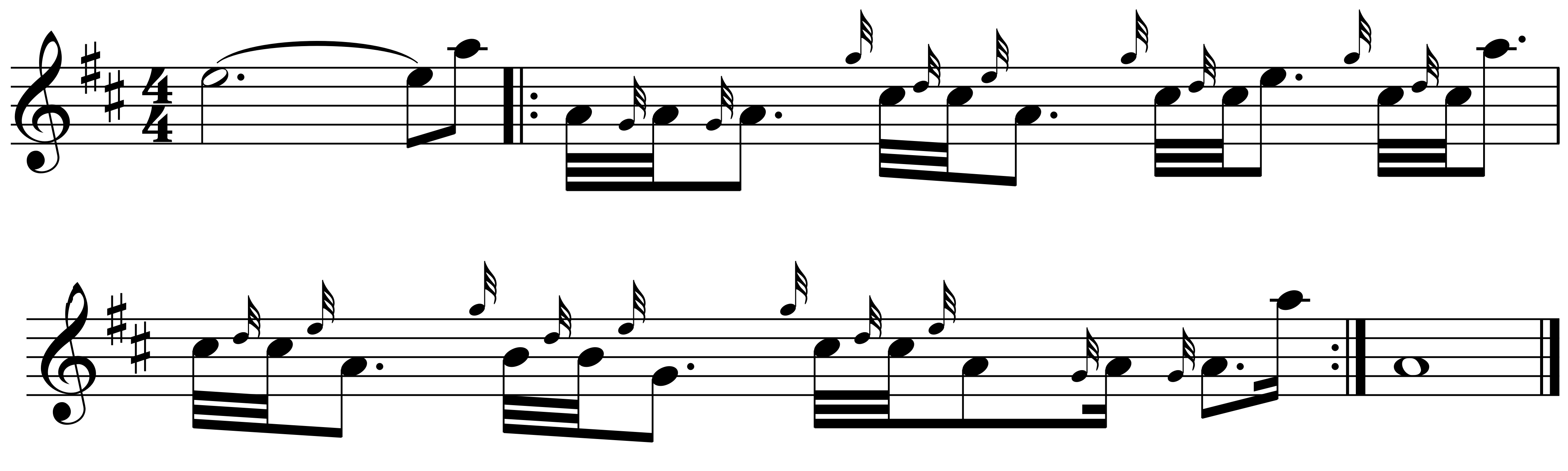
Exercise 5
howtodothings.com
Site map and contents
Youtube Channel
Clan Davidson Virtual Pipe Band
GHB Exercises
SSP Library
SSP Exercises
Medieval Music Library