Teach Yourself Bagpipes by Lindsay Davidson
bringing quality 'piping instruction to you for free| Select course Site entry page |
How to practise | Highland Bagpipe library (+videos and hints) |
Lindsay Davidson's tune library (scores only) |
Smallpipe library | Medieval pipes library | Site map |
| Buy Lindsay's Books | ||||||
Corriechoillies’s 43rd Welcome to the Northern Meeting
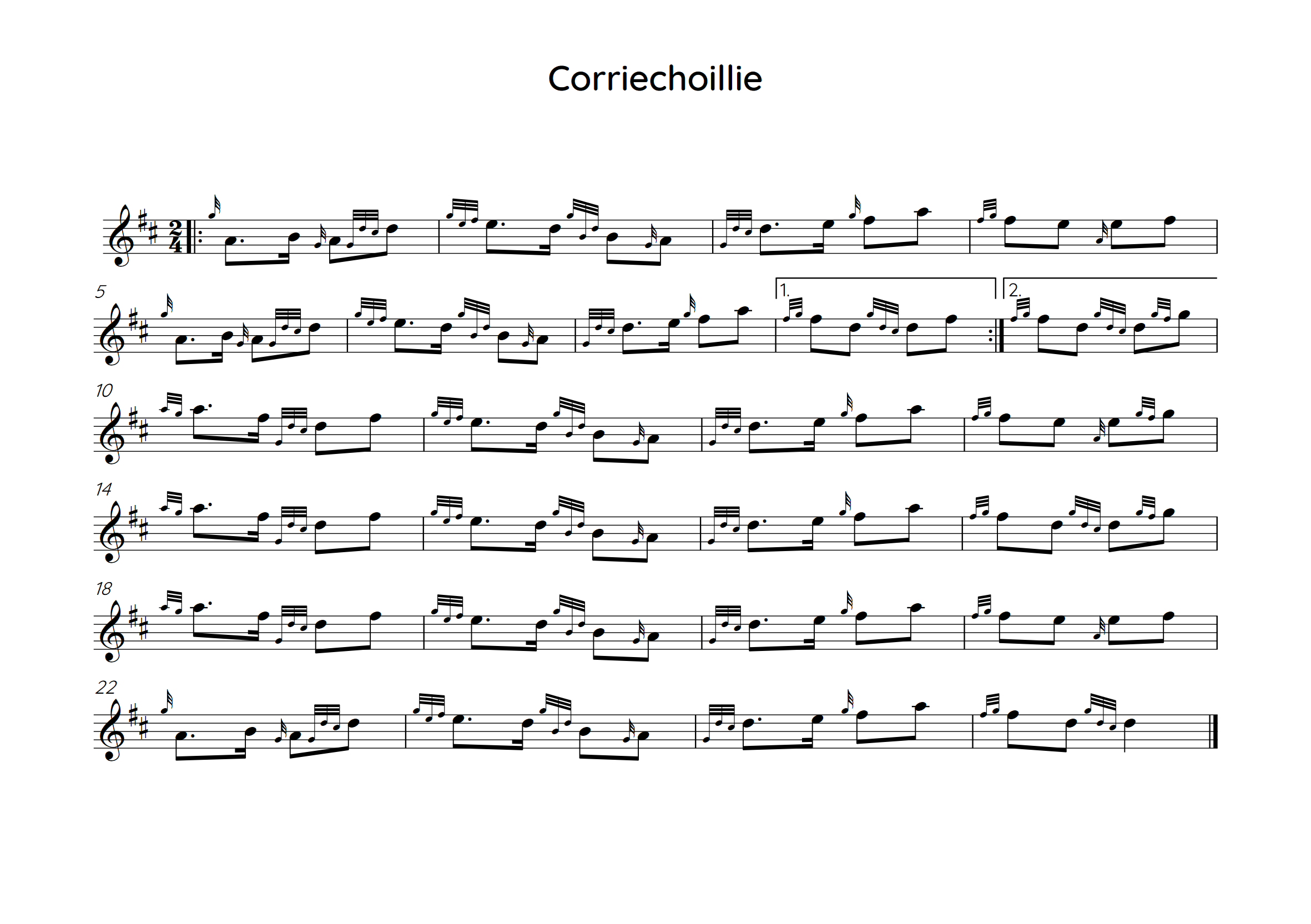
Five discussion points
Videos to play along with - exercises below
Low Pitch Normal Speed
Low Pitch Half Speed
Low Pitch Quarter Speed
High Pitch Normal Speed
High Pitch Half Speed
High Pitch Quarter Speed
Five exercises
For more information on how to use these exercises and videos to play along with please click on the links.
Exercise 1

Exercise 2

Exercise 3

Exercise 4
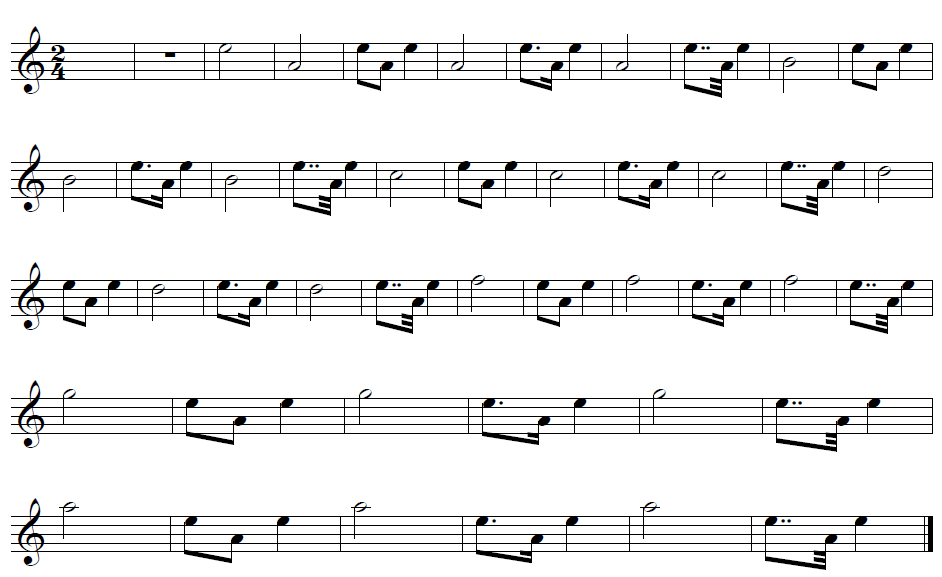
Exercise 5
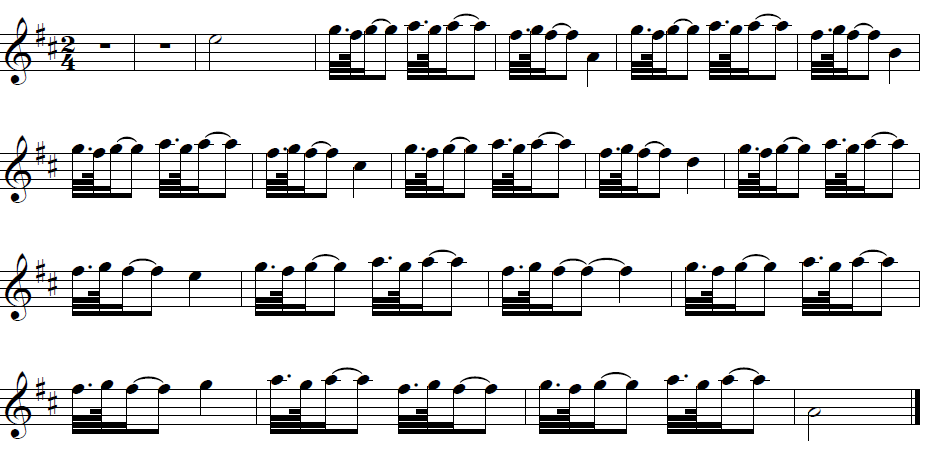
Five discussion points
1
Low G gracenote to low A in bar 1 - make sure that the little
finger goes down before the beat and comes up together on the beat.
This will give a good impression right at the start and set the tone of
excellence for the rest of the tune.
2 Throw in bar 3 - make a big, measured low G in this throw.
3 Strike bar 4 - the strike comes up on the beat, and so the finger must go down before the beat. This needs to be measured together.
4 Hara in bar 8 - make sure that the strike comes up on the beat. This can be interpreted differently and this decision has been taken in the interests of building a single style across as many MAP tunes as possible where the style can be justifiably unified. This will help your band improve more quickly..
5 Second part - high G doubling and high A should sound rhythmically identical. This in itself will drew listeners' attention and keep the audience active (including judges).
Videos to play along with - exercises below
Low Pitch Normal Speed
Low Pitch Half Speed
Low Pitch Quarter Speed
High Pitch Normal Speed
High Pitch Half Speed
High Pitch Quarter Speed
Five exercises
For more information on how to use these exercises and videos to play along with please click on the links.
Exercise 1
Exercise 2
Exercise 3
Exercise 4
Exercise 5
howtodothings.com
Site map and contents
Youtube Channel
Clan Davidson Virtual Pipe Band
GHB Exercises
SSP Library
SSP Exercises
Medieval Music Library