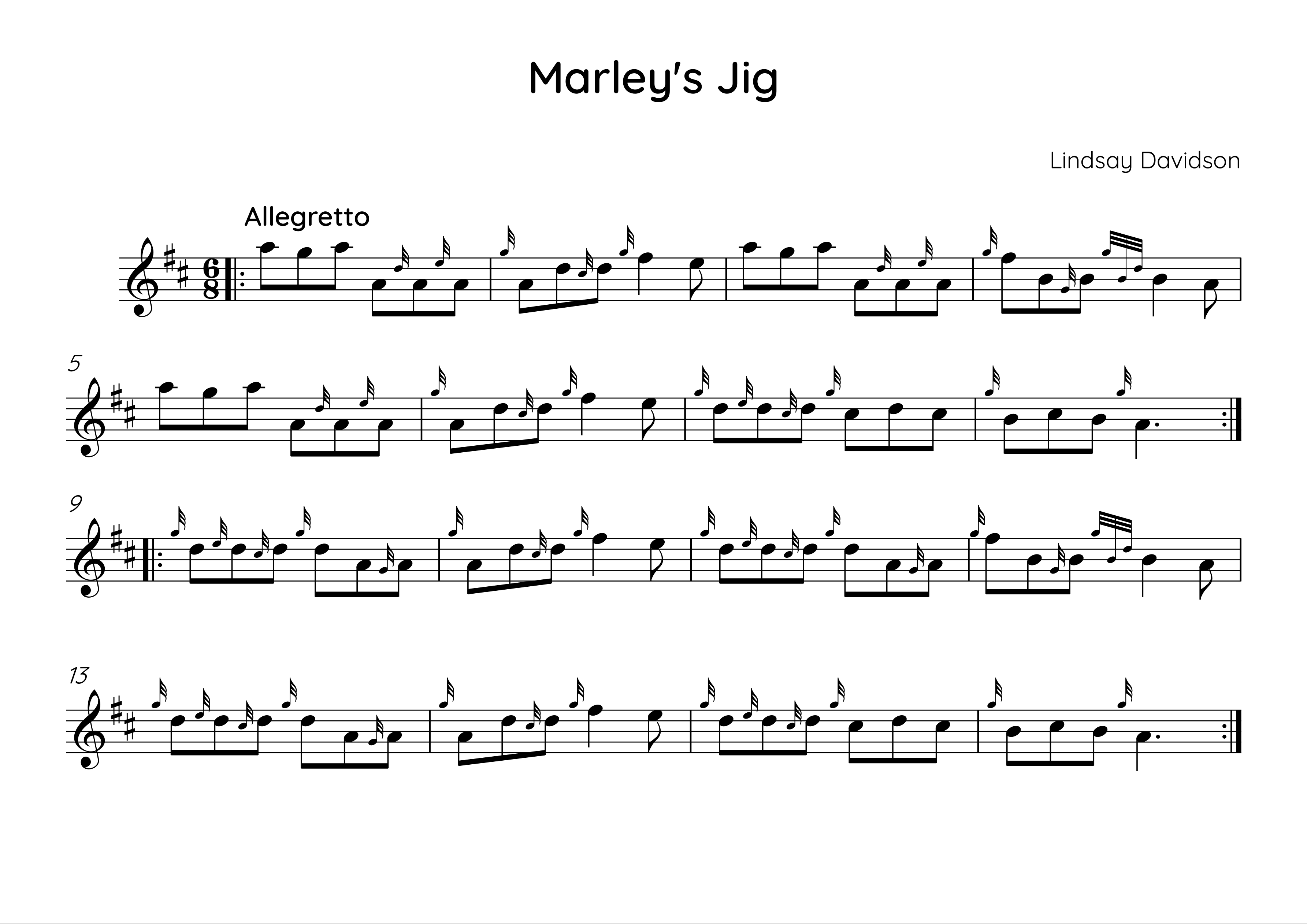
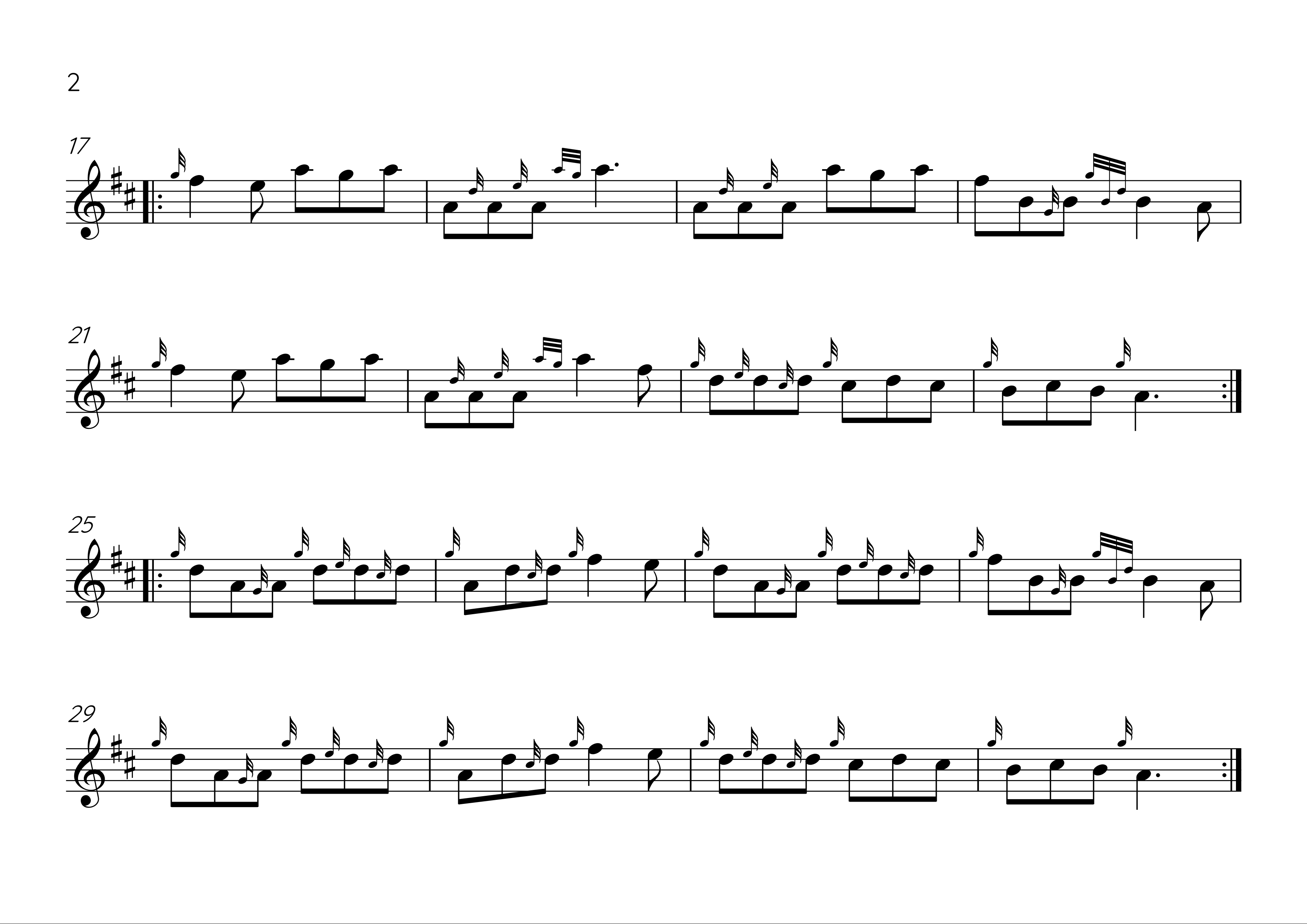
This tune belongs to a set of beginner jigs composed and arranged and published in one volume, available from Amazon.
This book of simple jigs for
beginner 'pipers is intended to be, as they say, “exactly what it says
on the box”. Put simply, these are tunes which can be used by people
who have recently started to learn to play bagpipes. They can be used
as exercises, or as simple little tunes.
For those at the start of their 'piping adventure, these tunes can
provide repertoire that is easy to learn and can bring satisfaction and
confidence.
The 'easiness' of these tunes is based upon using a small number of
repeating patterns in each, a limited range and low density of
gracenotes and embellishments, simple musical language and avoiding
tricky crossing sounds and rhythmical patterns. If there is a musical
compromise, it is for these specific reasons.
Learning discussion
1 There are two
lengths of gracenotes in this tune - big ones (high G at the start
ofthe beat) and smaller ones (D and E inside the beats). The big
gracenotes are 32nd notes whilst the smaller ones are half that length.
LIsten to the slow videos to hear the differnece.
2 The B doubling is fairly open. Give it the time and space for that. 'Feel' the B before you double it.
3 The trick here, as suggested by the explanation above, is
to find the repeated patterns and train your fingers to play them in
isolation, then overlap them (add one note to the end of a group and
also before).
4 Use the 7 coins method to build up security of technique,
but also keep repeating each tiny unit you train getting faster each
time till everything breaks down, then try again. This will build your
speed, fluency, and confidence.
Videos to play along with
Low Pitch Normal Speed
Low Pitch Half Speed
Low Pitch Quarter Speed
High Pitch Normal Speed
High Pitch Half Speed
High Pitch Quarter Speed
Exercises to help with ths tune (click on the links for more information and videos to play along with)