1
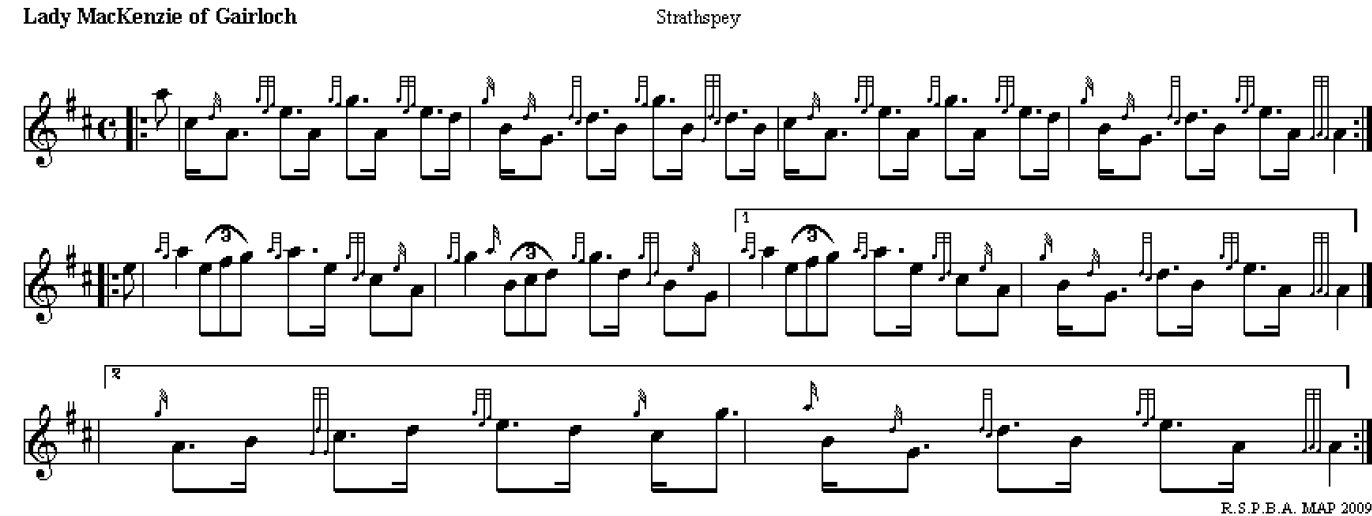
Tachum bar 1 - the D gracenote takes a quarter of the
semiquaver. This is not the only possibility, and has been chosen to
make it easier to help train the whole band to play this together, and
have a model tachum which can be applied in many places. The writer
plays this differently making the C and D gracenote the same length as
each other. This gives quite a different effect and if you are
preparing for solo playing, you might want to do this instead of the
interpretation given. Both are equally viable.
2 Last High G
gracenote in bar 1 (written in bar 2 but played in bar 1...) - this is
a longer gracenote as it serves to emphasise the first beat of the bar.
The gracenote takes up a third of the D preceding it and closes
on the beat. Listen carefully to the video files. This approach to
gracenotes in places where extra emphasis is needed has been used
frequently in these interpretations.
3 Bar 3 tachum -
rightfully this should have a high G gracenote to make it like
traditional tachums. No doubt the bar has been copied and pasted by the
typesetter, and the absence of a high G gracenote is simply a mistake.
Add one if you like.
4 E doublings and High G doublings and
High A doublings - the rhythms in these doublings after the beat
is the same everywhere. This is another place where you might want to
have everyone tap this rhythm out on the table together. This
consistency makes it easier to learn the tune, to play together, to
'feel' the rhythms and creates a very goo dstrathsey effect, a kind of
stability and consistency that accents the regularity of the beats (it
is a dance....!)
5 Bar 5 C doubling and Bar 6 B doubling - to
get the evenness in this is tricky when you are in the flow. Doing so
is worth the trouble though, giving contrast and interest.
6
Grip in second last bar - this takes up half of the B, and teh
impression of both low Gs being the same length (in fact they are not,
but they give that impression). Listen very carefully to the slow video
files.
Videos to play along with - exercises below
Low pitch normal speed
Low pitch haf speed
Low pitch quarter speed
High pitch normal speed
High pitch half speed
High pitch quarter speed
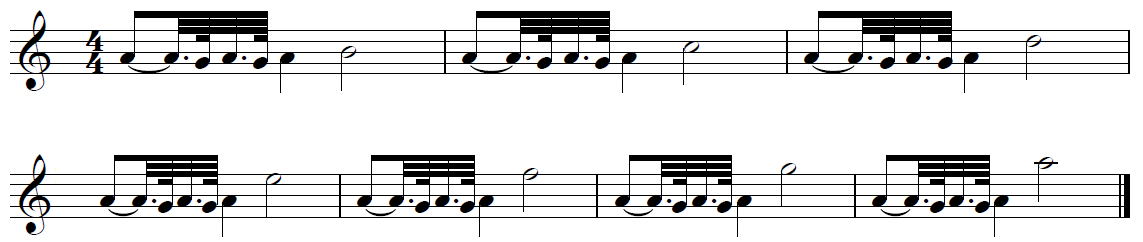
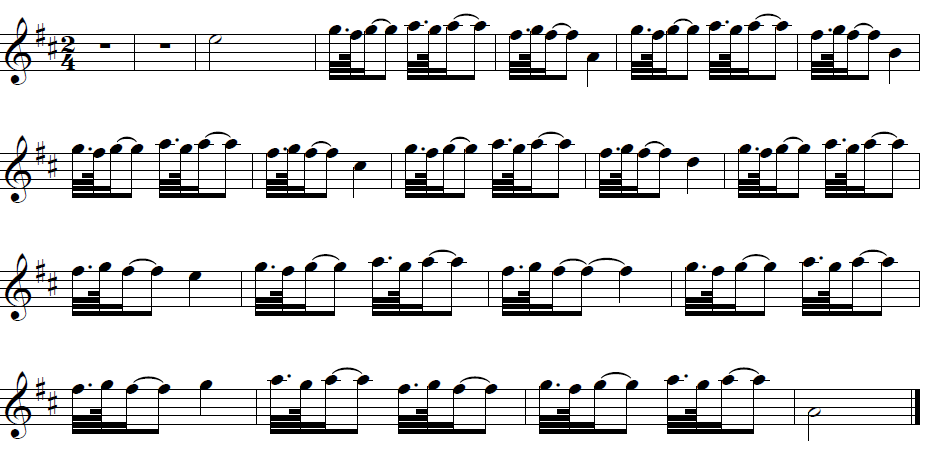
Five exercises - follow the links for videos to play along with