1
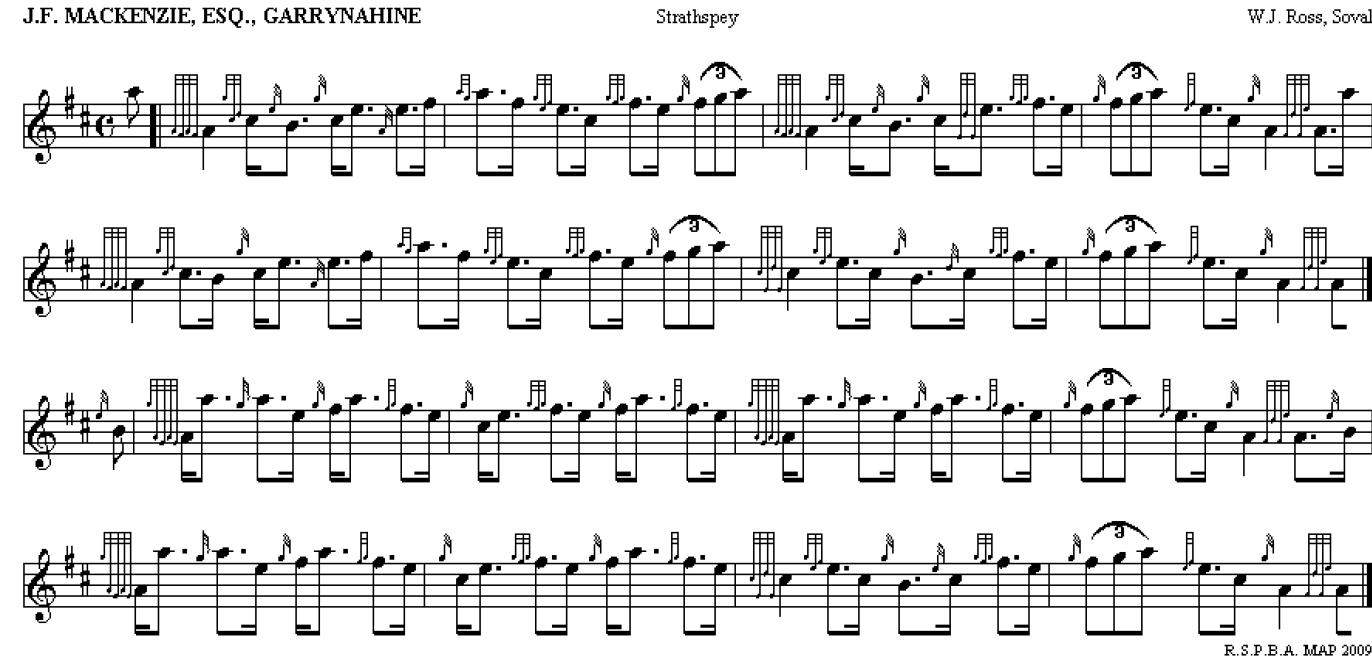
C doubling bar 1 - make sure that both Cs are the same length as
each other, and that there are short enough. Getting this effect
togetther as a band is actually easier to do than it seems, if you work
rhythmically, and has a tremendous impact on the listener.
2
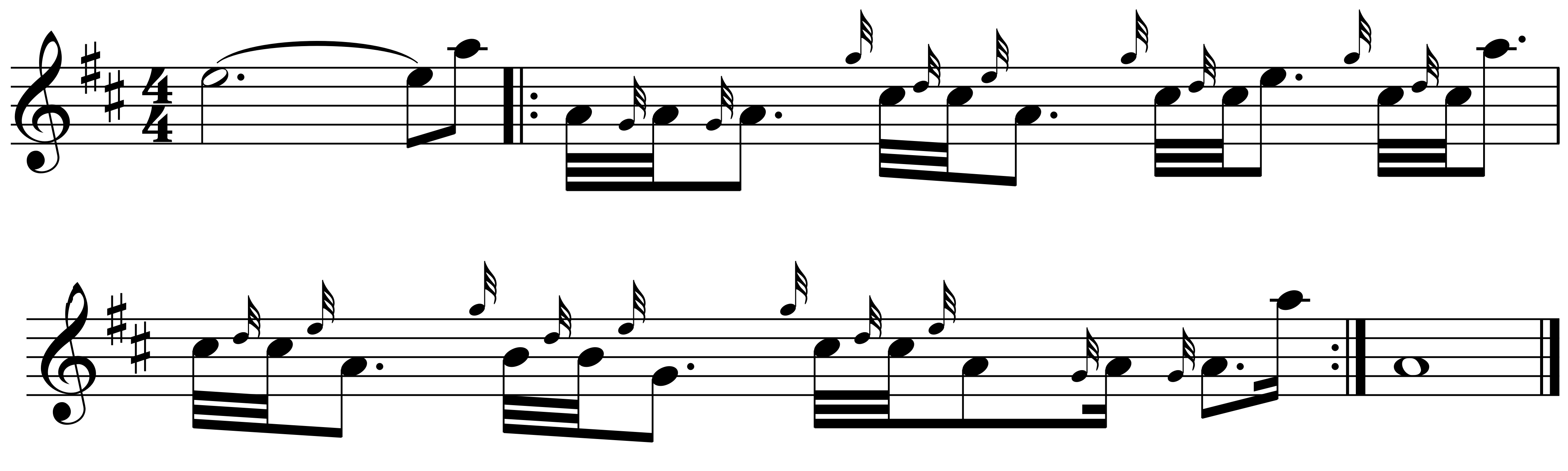
High G gracenotes generally - generally these are longer, heavier
gacenotes to give the tune a slightly ranting feeling. Mostly, they
take up a third of a 32nd note (see exercise 1). Listen to the midi file
for where this isn't the case...
3 Strike bar 1 - this, too, is a third of a 32nd and opens on the beat.
4
E doubling bar 2 - this is opened by a small high G gracenote,
which closes on the beat, the same length as the F cut (a 64th note).
This choice has been made in order to mark out the strathspey pattern
of emphasis.
5 Grip bar 3 - this needs to be extremely crisp
and lightly done, otherwise the tunes gets completely bogged down. This
will take a lot of slow rhythmical training together to get it to work
adequately, but the effect is worth it (and repeats in many strathspeys).