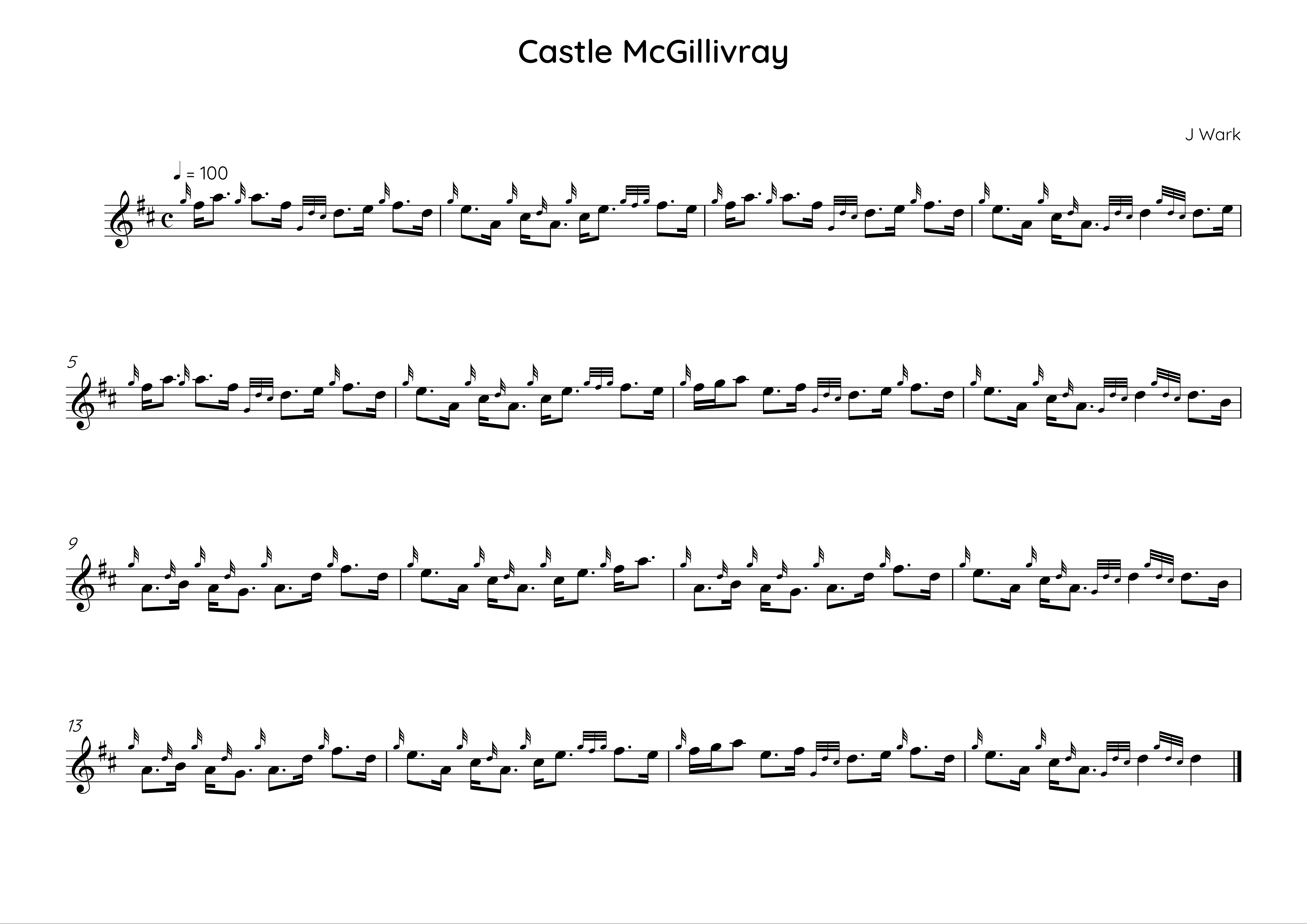
1 In and of
themselves, all of the throws are identical in this interpretation; the
low G is a 32nd note, which means where it is preceded by an F, it is
equal in time to the short F. The beat happens where the D is opened.
2 The 'Hara', after the beat, is the same as the
throw, rhythmically. The G gracenote is before the beat and closes on
the beat, making this a little like a doubling as usually played. This
is not always the case.
3 There is a special interpretative 'trick' used
here, taught to the author by his teacher, Pipe Major Jimmy Inglis.
Where there are two 'cut' notes next to each other, the first note has
been given extra time as a kind of a platform to make the tune seem to
have more spring and bounce. This applies to the ACA in bar 2 for
example. The first note is made into the shorter note of a triplet
within the first beat, and the C and following low A are given
the values as in the music. As ever...listen carefully to feel this and
make it happen.
4 All high G gracenotes that come before the beat are the same length as each other - a 64th note.
5 Listen carefully to how the doublings work - the
introductory gracenote closes on the beat and there is a 'bouncy'
effect for the repetition of the note. If you say the word 'bouncy'
whilst listening to the slow videos, you will perhaps find a recipe to
always get this rhythm to work nicely.
Videos to play along with (exercises below)
Low Pitch Normal Speed
Low Pitch Half Speed
Low Pitch Quarter Speed
High Pitch Normal Speed
High Pitch Half Speed
High Pitch Quarter Speed
Exercises - for more detailed instructions and videos to play along with click on the links