1
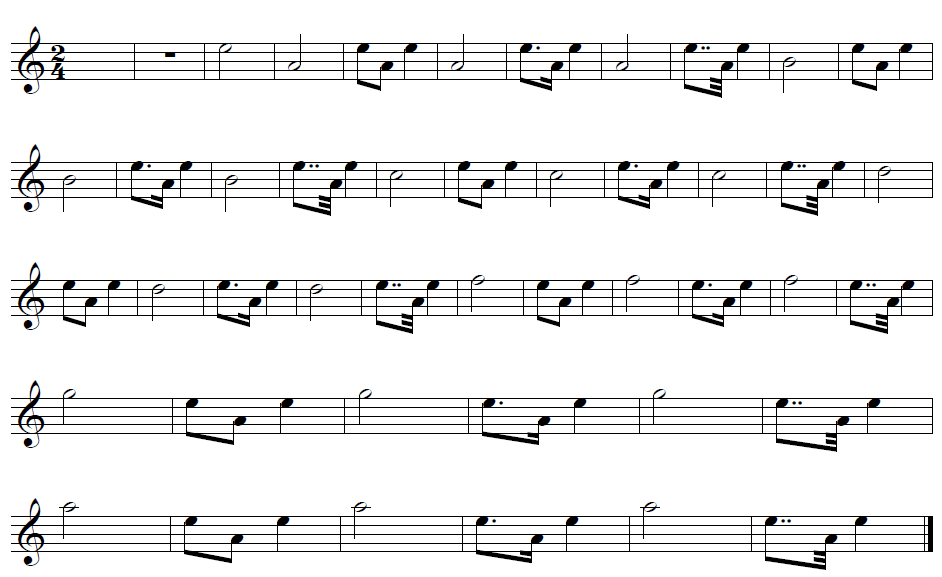
Bar 1 G gracenote from F - to play this gracenote so quickly
will be a challenge in this tune. It can be half of the length of the
preceding F and close on the beat.
2 Bar 1 hara - make sure
the first D is where the beat happens - this will balance the phrasing
and the tune extremely clear and easy for the listeners to understand.
All the later haras should follow this pattern to make the most sense
of this choice.
3 Bar 2 throw - take half of the preceding
F for the low G. All later throws should follow the same pattern -
half of the preceding semiquaver (16th note)
4 Bar 3 high G
gracenote to C. This should be a big high G gracenote to emphasise the
next phrase. In solo playing this would become a third of a quaver, but
this involves a switch in thinking from dividing beats into four and
instead diving into three. In band playing this is not very practical
and so a compromsie should be recommended. This compromise is to make
the gracenote short and start it later, in other words making it a 32nd
note closing on the beat, and so opening n the last 8th of the preceding
beat. Listen to the slow tune files to understand this more clearly.
5 Bar 4 birl - the second strike comes up on the birl here and on every later occurance.
Videos to play along with - exercises below
Low pitch normal speed
Low pitch half speed
Low pitch quarter speed
High pitch normal speed
High pitch half speed
High pitch quarter speed
Five exercises - click on the links for videos to play along with, and more information