1
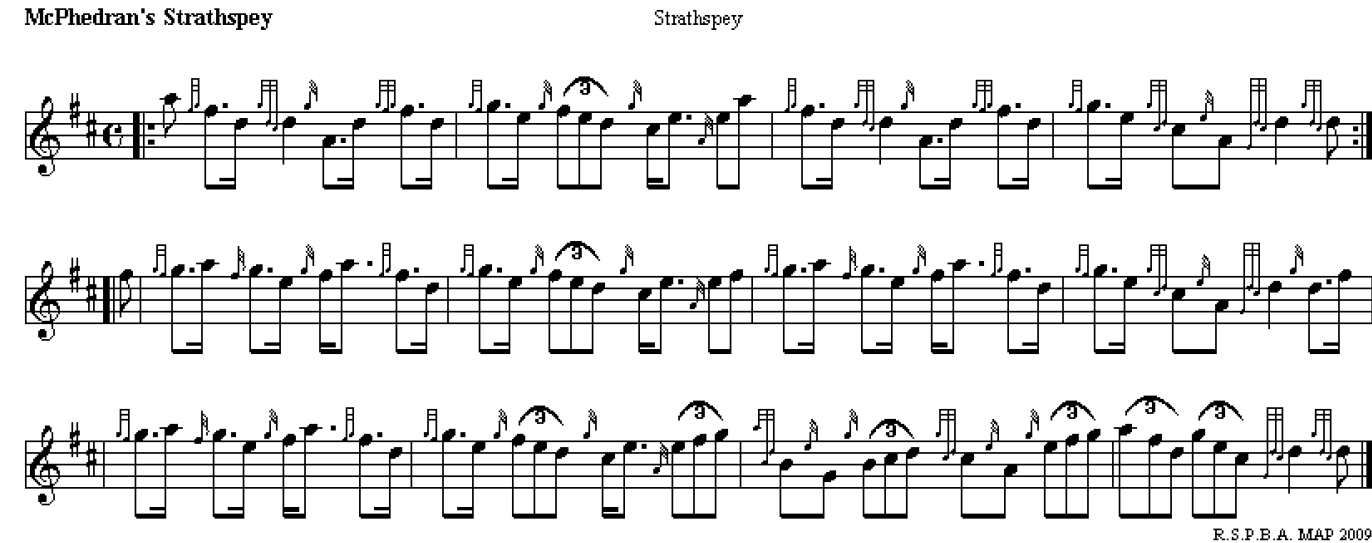
Hara - High g gracenote opens before the beat and closes on the
beat. It is the slightly longer gracenote used frquently elsewhere in
these tunes. The D is on the beat and the strike is very light and
short after it. Listen carefully to the midi files.
2
Doublings - whilst the high G gracenotes vary (some are long, in
beats where there should be more emphasis), after the beat they are all
rhythmically the same.
3 Strike bar 2 - comes up on the beat and lasts a thirty-second note.
4
C doubling bar 4, bar 8 and B/C doubling bar 11 - getting this
rhythm right when you are in the flow will take a bit of discipline,
but the contrast willbe recogined by the audience (judges) and is worth
thr trouble. It is details like these that make the difference between
'just another generic strathspey' and an interpretation.
5
Triplets and G gracenote - triplets, when the writer was young, simply
didn't exist. They do now. Listen carefully to get this variety to work
and be careful about the high G gracenotes, which take up a quarter of
a third of a quarter note (if we want to be purposefully obtuse.!).
Without being obtuse, listen to the videos...
Videos to play along with - exercises below
Low pitch normal speed
Low pitch half speed
Low pitch quarter speed
High pitch normal speed
High pitch half speed
High pitch quarter speed
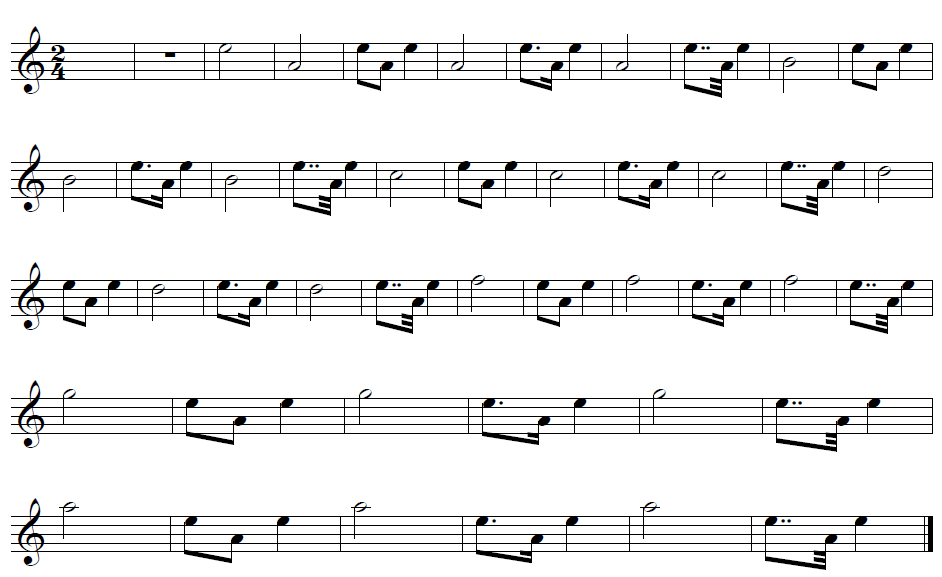
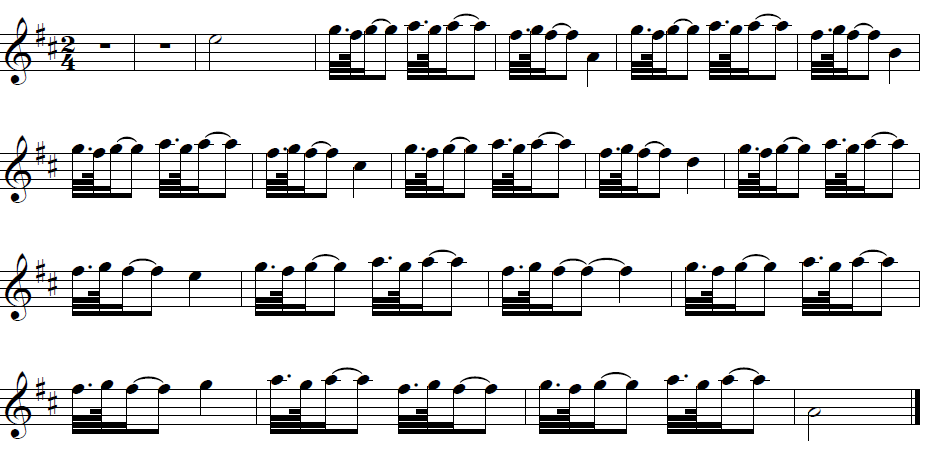
Five exercises - click on the links to get videos to play along with and more information