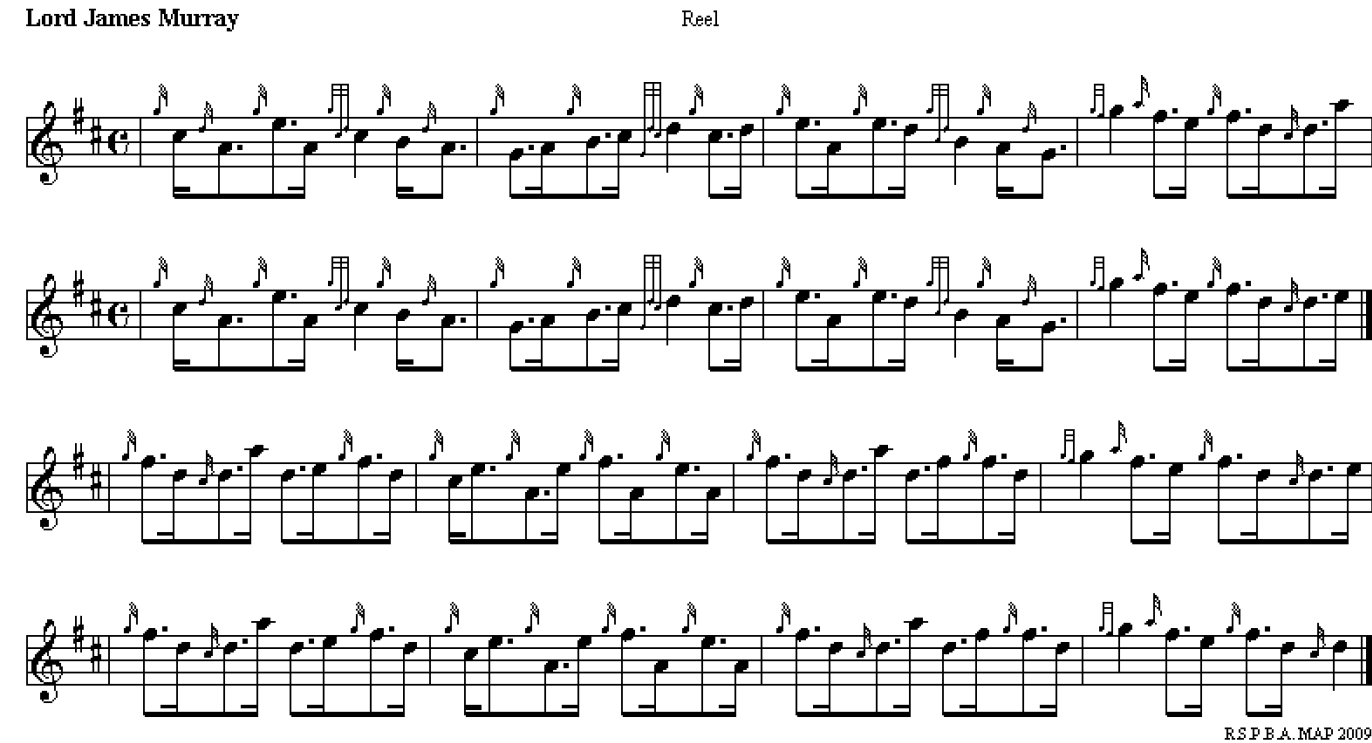
1 Bar 1
tachum - the C is three times the length of the D gracenote, as has
been
chosen in the majority of cases in the rest of the MAP tunes (the
writer himself usually does something different)
2
Bar 1 high G gracenote immediately after the tachum is a
longer
gracenote (32nd note) and closes on the beat, but the later gracenotes
in this bar are short (64th notes).
3 Bar 2 high and low G
gracenotes (in the throw) are the same length as each other and the
rhythmical pattern of the first beat here is
repeated in the
second beat. This repetition of rhythm helps the group to learn
together and also involves less changing of patterns, which is
inherently easier to learn as well. This also gives the effect of a
light throw, further supported by the short strike in the
throw.
4 The strikes all open on the beats, giving consistency and
ease of learning.
5
Bar 10 high G gracenote to low A is a 32nd note, which is
longer
than the other gracenotes. This helps to keep the tune balanced and the
drive going but without being over heavy.
Listen carefully to the video
files.
This section of the website has tunes taken from the Royal Scottish Pipe Band Asociation (RSPBA) prescribed tune list.
If you learn these tunes, there will be a large number of people you can be sure to find tunes in common with.
The
RSPBA update their list from time to time and the versions here
followed their original published versions, pending updates in due
course.
These videos show the music and you can hear midi generated
tracks where the rhythm of the gracenotes and embellishments is
maintained in proper interprative proportion. You should try to feel
the rhythm and also count it out exactly. Start with the fastest files
and as you get better, go to the slower files, as this is a true
measure of your security of technique.
Each file is given at
two pitches, A and B flat. This reflects the different practice chanter
tunings commonly found. Please scroll down to what you need (site
updated for smart phone and tablets)
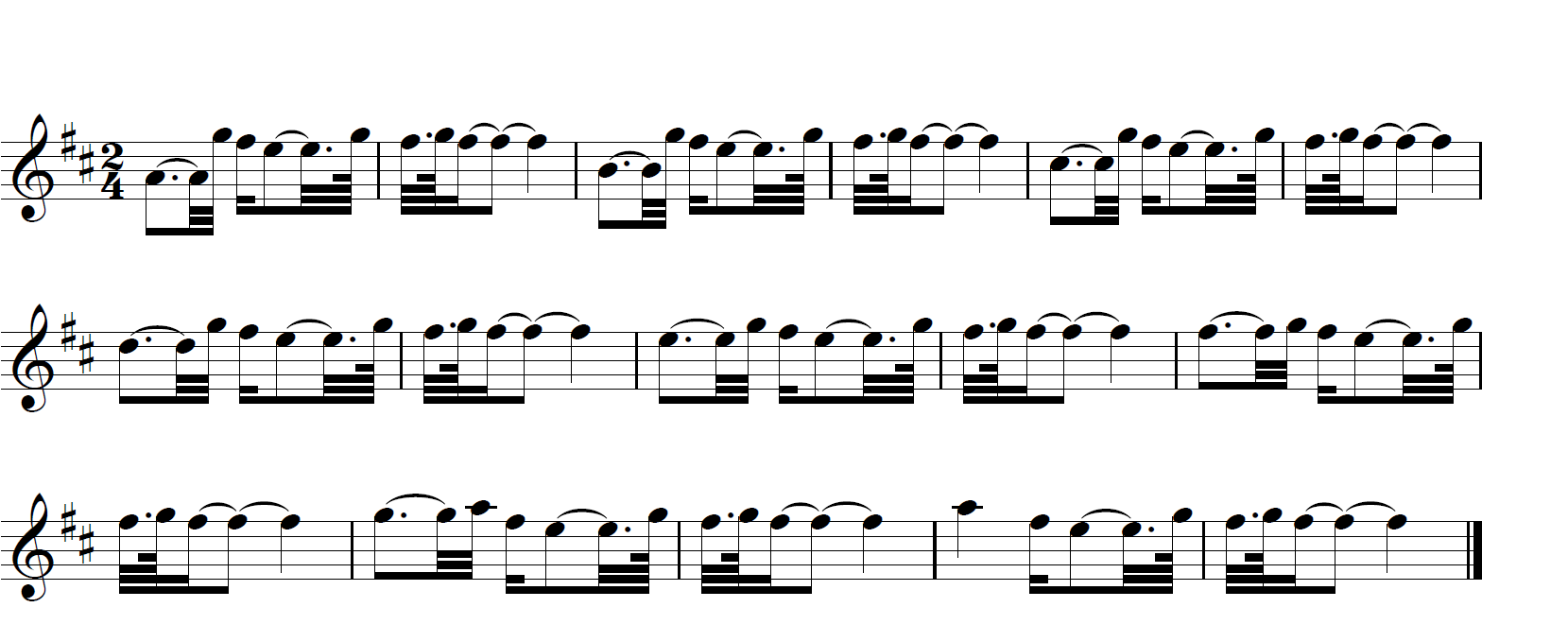
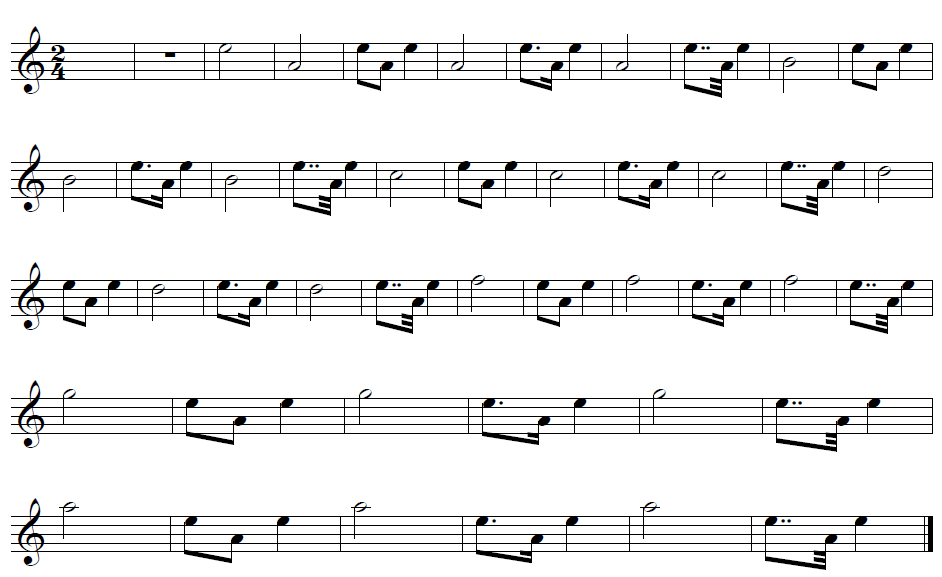
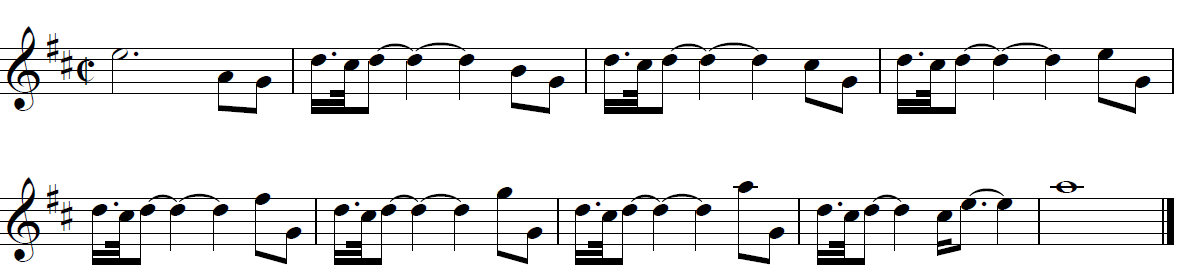
The exercises below are chosen to help with some particular trickiness in each tune.
Videos to play along with
Low Pitch normal speed
Low Pitch half speed
Low Pitch quarter speed
High pitch normal speed
High pitch half speed
High pitch quarter speed
For more information on how to use these exercises and videos to play along with please click on the links.