1
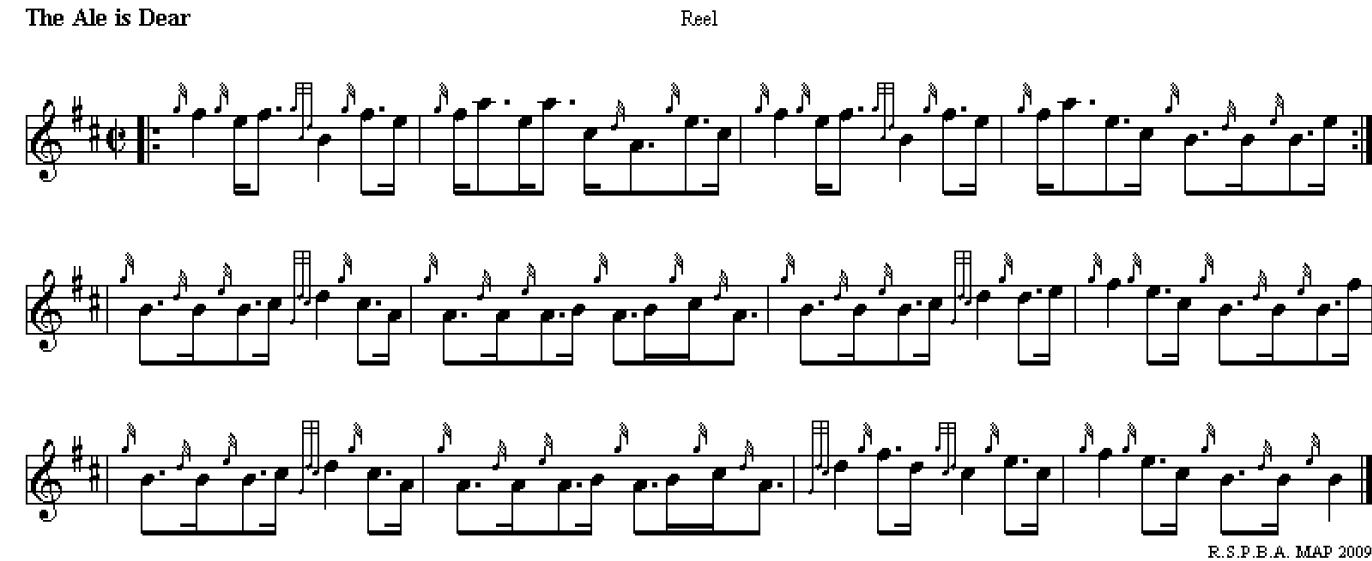
Bar 1 High G gracenotes - not all of the high G gracenotes
are
the same length in this interpretation. This is needed
because of
the doubling and in order to make the other notes have enough length to
make adequate impact in the rest of the interpretation. The 'long' G
gracenotes are 32nd notes whilst the 'short' ones are 64th notes. The
gracenotes in all cases close on the beats. As ever, the best way to
get on top of this is to listen to the midi files.
2 B
doubling bar 1 - listen carefully to the rhythm of this to get the
proportion between the B and D gracenote to the relation 3:1 (three
64ths against one 64th). This pattern is repeated in the tachum later
and in many doublings and tachums through the reels (and indeed the
whole MAP) section.
3 Bar 2 G gracenote to E - this is a 32nd
note, while the last G gracenote (from C to F) is a 64th note. This is
to place emphasis on the phrase ending here. The effect of
highlighting the E is to make it seem longer than it actually is.
4
Bar 5 throw - the C and low G are the same length
as each
other and the D opens on the beat. The strike is a quarter of the
preceding D. Listen to the midi file. This is a throw of medium weight
- neither heavy, nor light.
5 Bar 11 C doubling - there
is not enough time available to make the high G gracenote as long as
instinct would suggest. A soloist might give the high G gracenote a
third of the preceding D (thus involving triplets and getting an extra
layer of complexity in here, this can happen in the MSR section), but a
band would be better advised to avoid introducing further layers of
difficulty and opt for a quarter of the D going to the high G
gracenote. As ever, rather than talking about it, please listen to the videos below.
This section of the website has tunes taken from the Royal Scottish Pipe Band Asociation (RSPBA) prescribed tune list.
If you learn these tunes, there will be a large number of people you can be sure to find tunes in common with.
The
RSPBA update their list from time to time and the versions here
followed their original published versions, pending updates in due
course.
These videos show the music and you can hear midi generated
tracks where the rhythm of the gracenotes and embellishments is
maintained in proper interprative proportion. You should try to feel
the rhythm and also count it out exactly. Start with the fastest files
and as you get better, go to the slower files, as this is a true
measure of your security of technique.
Each file is given at
two pitches, A and B flat. This reflects the different practice chanter
tunings commonly found. Please scroll down to what you need.
The exercises below are chosen to help with some particular trickiness in each tune.
Videos to play along with
Low Pitch normal speed
Low Pitch half speed
Low Pitch quarter speed
High pitch normal speed
High pitch half speed
High pitch quarter speed
Exercises (click on link to go to page with videos to play along with)