1
Generally try to think of this tune as being in 4/4 time
instead
of 2/2. This will give the effect of playing faster, without actually
needing to do so. It also give your drummers a great deal of
opportunity to show off good playnig together that needn't be very
hard.
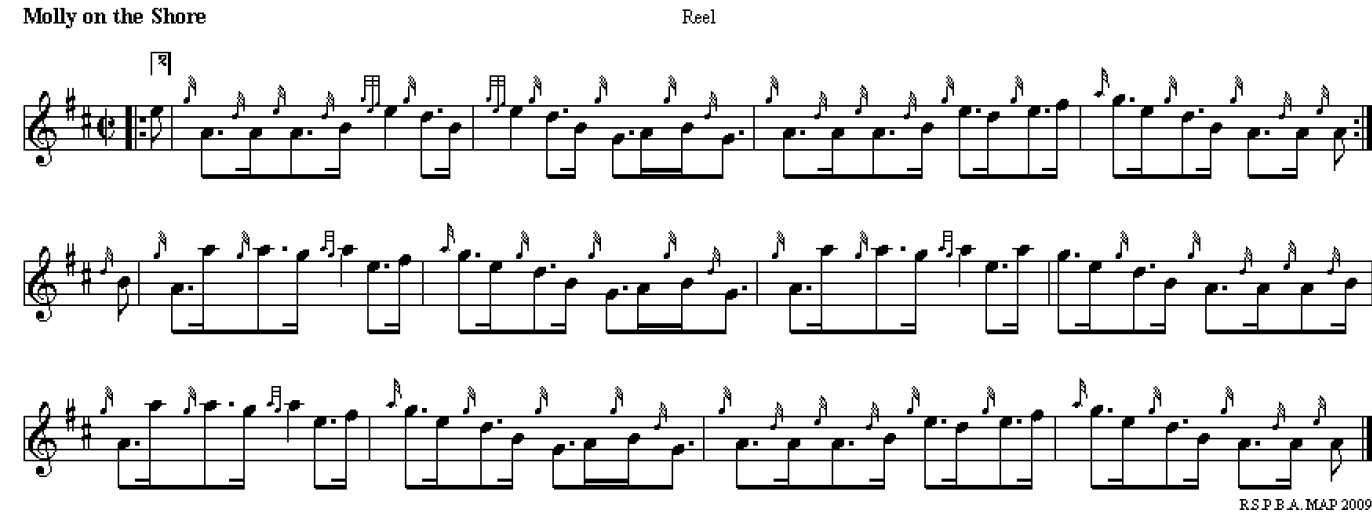
2 E doublings - all the high G gracenotes going into
the E doublings are 64th notes. This is because of the overall
rhythmical character of the tune.
3 G gracenote to D bar 1 -
this is a 32nd note as it is introducing a new subphrase, which should
be accented. The gracenote closes on the beat.
4 Tachum
bar 2 - the D gracenote is shorter than the B. This is a question of
style, but this decision here has been taken to keep the flow of
rhythmical shpae for the band and thus make it easier to be together
all the time.
5 Last part (line 2 onwards) high A
with strikes/high A doublings. The relationship between the high A and
the high G is the same in these cases, but they occur at different
points in the bar. As in other such instances, tap this out on the
table to become aware and you will strengthen your band's rhythmical
accuracy. Another knock-on effect of this will be to avoid a tendency
to speed up.The reasoning behind that remark is a long story...
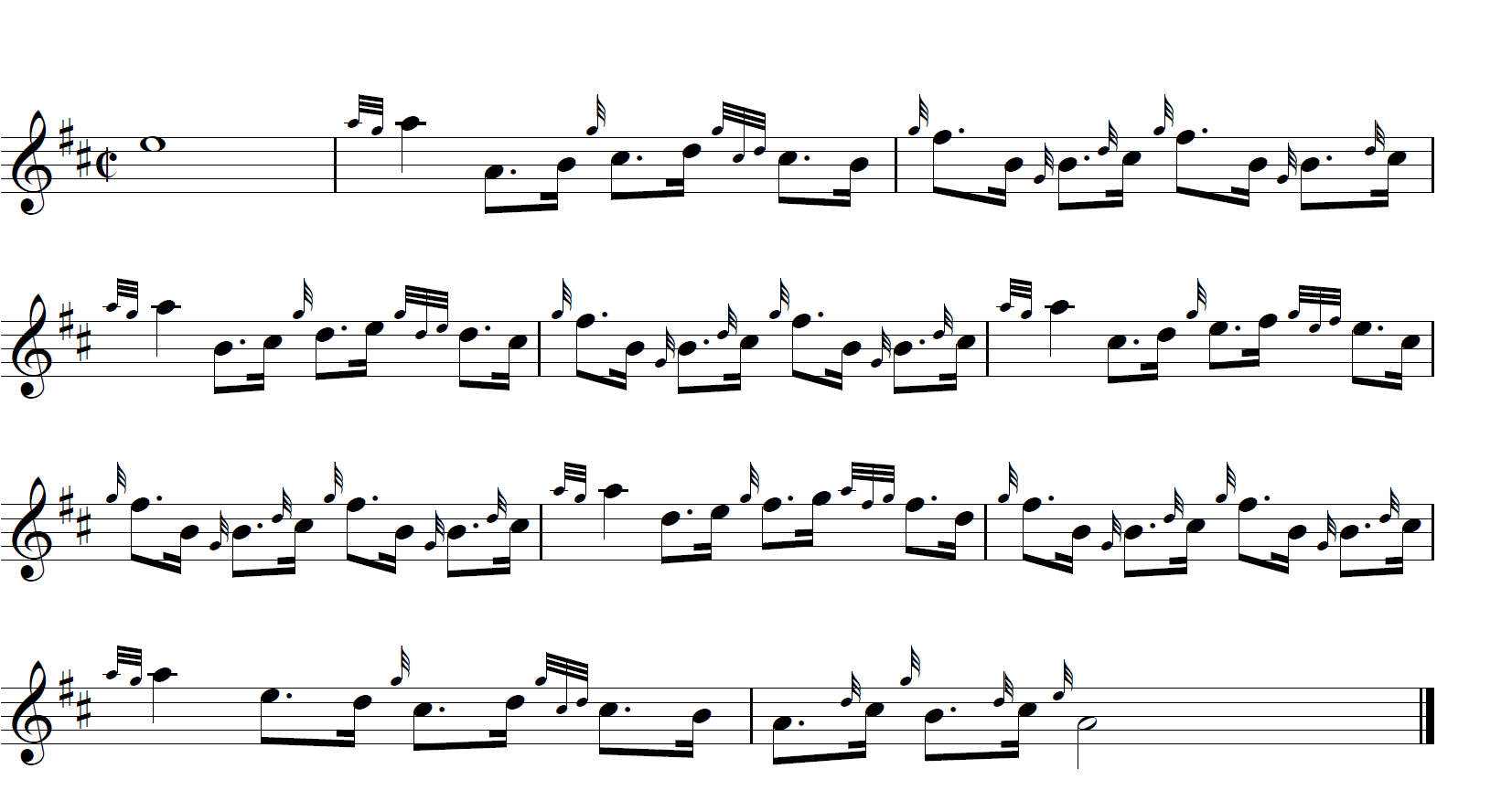
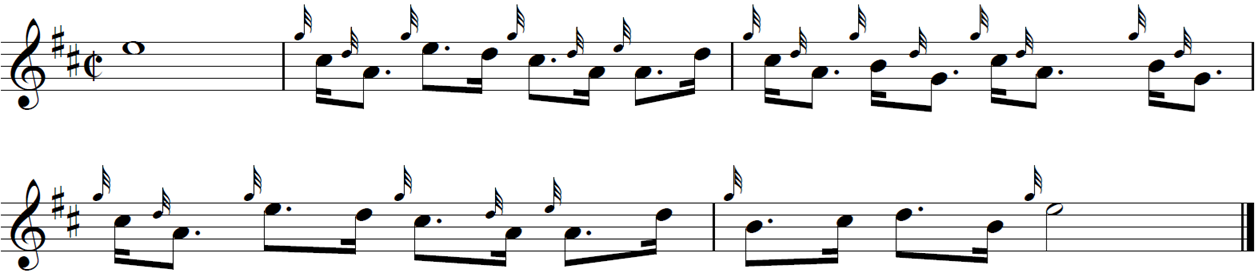
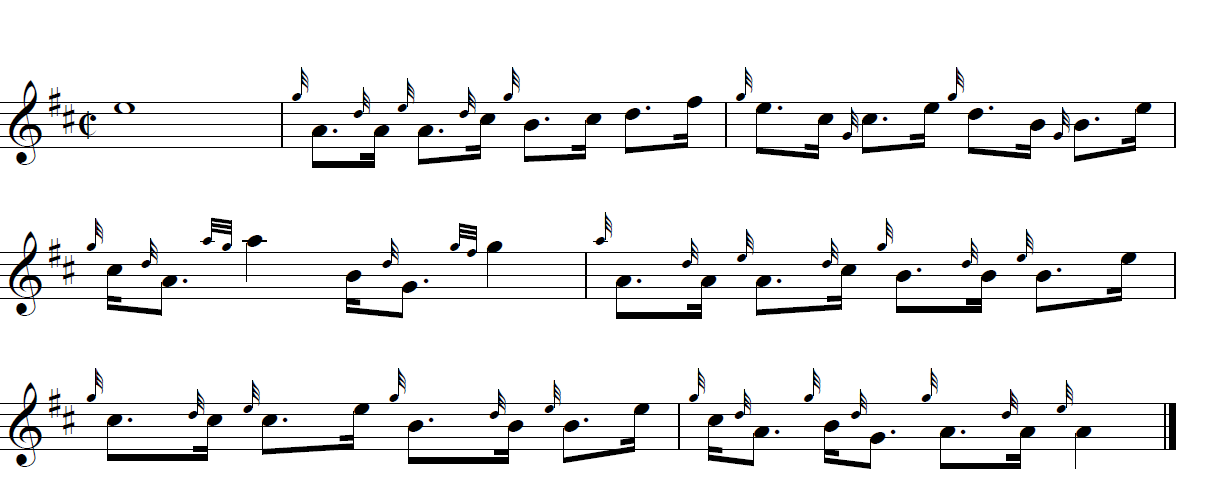
Five exercises
This section of the website has tunes taken from the Royal Scottish Pipe Band Asociation (RSPBA) prescribed tune list.
If you learn these tunes, there will be a large number of people you can be sure to find tunes in common with.
The
RSPBA update their list from time to time and the versions here
followed their original published versions, pending updates in due
course.
These videos show the music and you can hear midi generated
tracks where the rhythm of the gracenotes and embellishments is
maintained in proper interprative proportion. You should try to feel
the rhythm and also count it out exactly. Start with the fastest files
and as you get better, go to the slower files, as this is a true
measure of your security of technique.
Each file is given at
two pitches, A and B flat. This reflects the different practice chanter
tunings commonly found. Please scroll down to what you need (site
updated for smart phone and tablets)
The exercises below are chosen to help with some particular trickiness in each tune.
Videos to play along with
Low Pitch normal speed
Low Pitch half speed
Low Pitch quarter speed
High pitch normal speed
High pitch half speed
High pitch quarter speed
For more information on how to use these exercises and videos to play along with please click on the links.