Discussion points
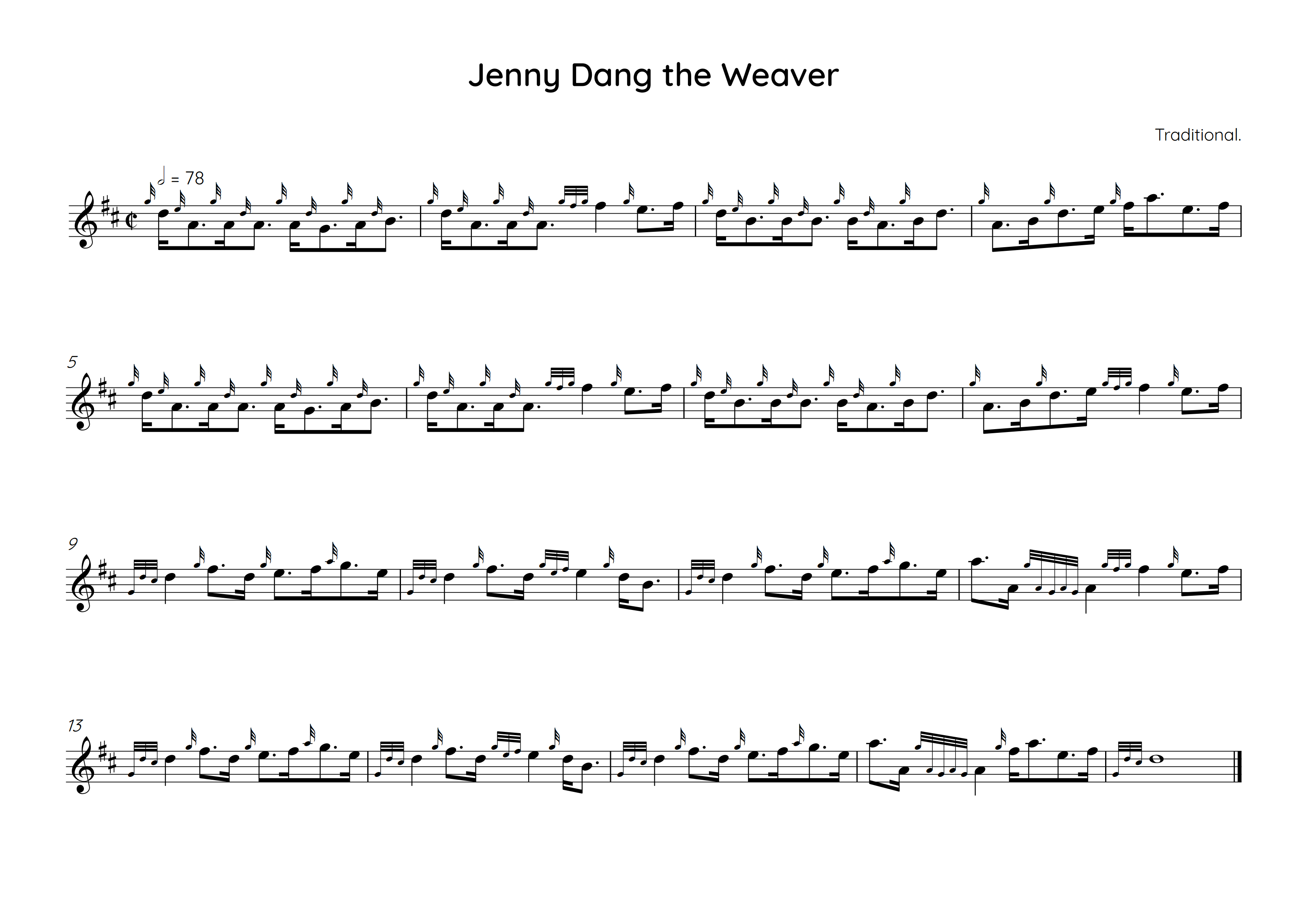
1 High G gracenotes to the low A, bar 1 beat 2 is bigger than the other High G gracenotes. This is to give a more driving and rhythmical effect. It is still very short, but is twice the length of the other gracenotes. This also applies to the following gracenotes: bar 3 beat 2,
2 Bar 4 the two seimquavers next to each other end of beat one start pf beat two...treat the D and E at the end of beat one as a triplet where the D is twice the length of the E. This gives a nice interpretative effect of 'bouncing ' through this rhymthimcal pattern.
3 F doublings all have a small High G gracenote introducing them in the second part of the tune,but a longer high G gractenote introducing them in the first part. This is specifically caused by the short note before the doublings in part 2.
4 Throw - the F and low G are the same length as each other and the first D opens on the beat. The High G gracenote after the throw leading onto the F is longer, like in bar 1.
5 Birls - the effect of the low As in the birl should be two sixteenth notes and an eighth note, with the first low A of the birl hitting the beat.


